Description
'It was at this point that Wigner, Hund, Heitler, and Weyl entered the picture with their "Gruppenpest": the pest of the group theory... The authors of the "Gruppenpest" wrote papers which were incomprehensible to those like me who had not studied group theory, in which they applied these theoretical results to the study of the many electron problem.' - John Slater
Despite the somewhat hostile attitude some physicists were taking towards group theory in the 20s, group theoretic methods have been wildly successful in theoretical physics and are now considered standard tools. In this project we'll focus on how groups and representations naturally arise in quantum mechanics and how they can be used to elucidate the properties of molecules, atoms and elementary particles.
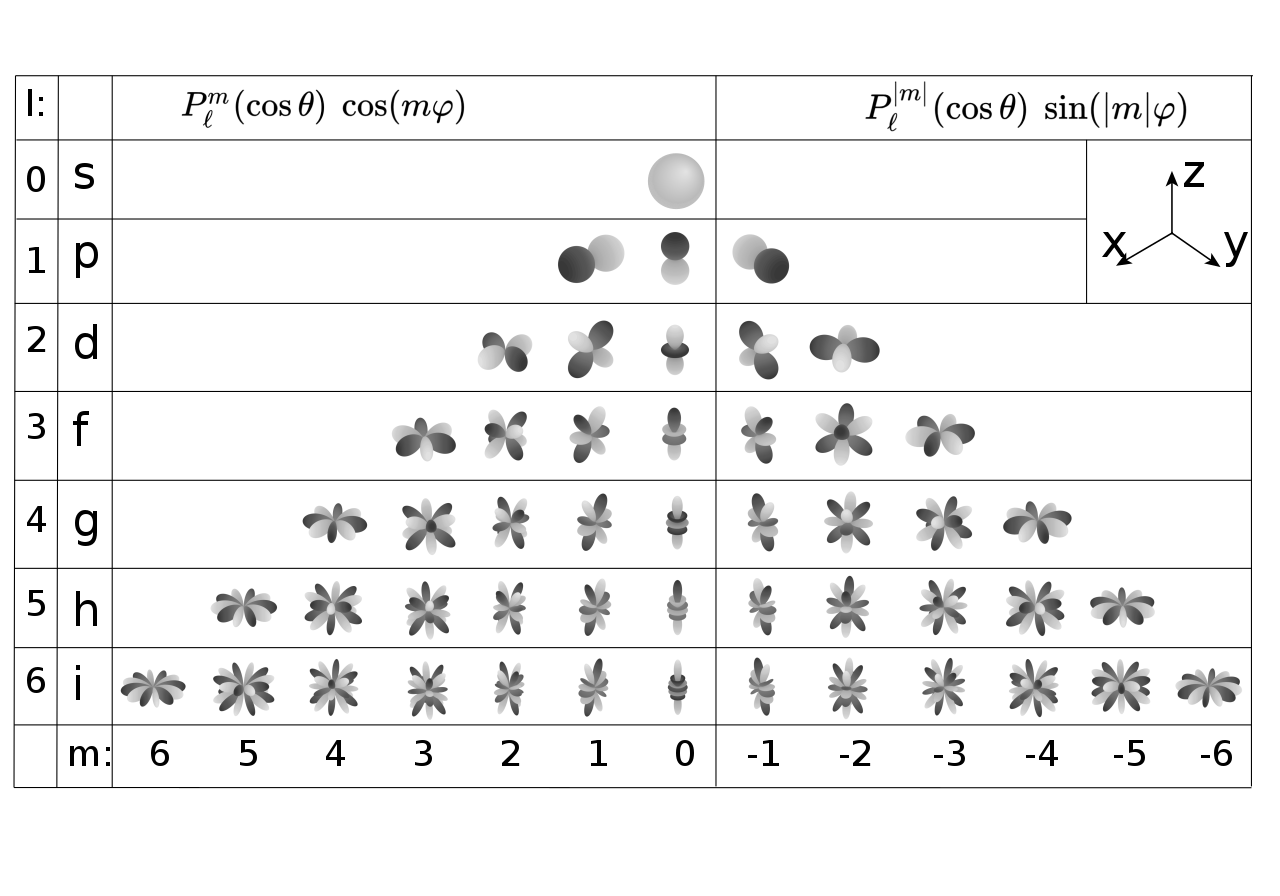
Group project
After reviewing some mathematical aspects of group and representation theory, we will study some of the most striking applications to quantum mechanics, such as- Symmetries and conservation laws in quantum mechanics, groups and representations
- Permutation symmetry and Young tableaux
- Rotations and angular momentum, addition of angular momenta
- Atomic spectra and selection rules
Mode of operation and evidence of learning for the group project
The group will operate through regular meetings, reading allocation, exercises, and collaborative discussion of key concepts. The project will revolve around learning through reading with focus on the underlying theory, mathematical rigour, development of conceptual understanding and applications to theoretical physics. Students will demonstrate their understanding by solving relevant problems, exploring examples and theoretical applications of the material, and clearly communicating it in both written and oral formats.Individual project
For the individual project, we will continue the first part by choosing from the near endless list of continuations, examples are- Wigner's theorem
- Spin and spinors
- The Lorentz group and relativistic problems
- The Poincare group and supersymmetry
- CPT
- Quarks and the eightfold way
Mode of operation and evidence of learning for the individual project
The group will operate through regular meetings, reading allocation, exercises, and collaborative discussion of key concepts. The project will revolve around learning through reading with focus on the underlying theory, mathematical rigour, development of conceptual understanding and applications to theoretical physics. Students will demonstrate their understanding by solving relevant problems, exploring examples and theoretical applications of the material, and clearly communicating it in both written and oral formats.Pre and Co-requisites
MATH2071 Mathematical Physics II
MATH3111 Quantum Mechanics III