Description
Research area: Applied mathematics
Shear flows arise when adjacent layers of fluid move parallel to each other at different speeds, creating velocity gradients. These flows are common in a wide range of physical systems, including atmospheric jets, the ocean, astrophysical disks, blood vessels, and various industrial applications. Under certain conditions, the velocity gradient can destabilize the flow, leading to the growth of disturbances and eventually to turbulence. Understanding when and how turbulence arises is a central question in fluid dynamics.
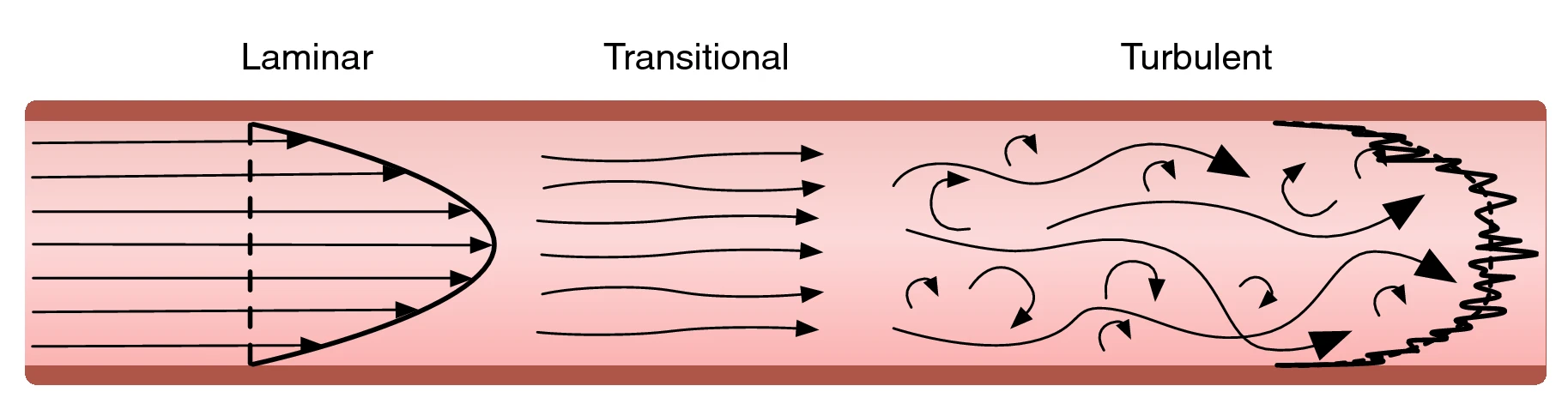
In this project, we will explore the mathematical and physical mechanisms that lead to instability in shear flows. We will begin with a review of the governing equations and the fundamentals of linear stability theory, before deriving classic criteria used to assess the stability of shear flows. Following this, students will be encouraged to pursue a specific area of interest.
Some possible directions are listed below, though students are welcome to explore alternative topics aligned with their own interests:
- The interaction of shear flow instabilities with stratification, rotation or magnetic fields.
- Applications of shear flow instabilities (e.g., in stellar radiative zones or the ocean).
- Extensions of classical results to the case of non-newtonian fluids.
- Numerical solutions of the Orr-Sommerfeld equation.
Mode of operation and evidence of learning
Initially, the project will involve learning through reading and working through relevant background material. Key ideas and results from the literature will be discussed in regular meetings, and students will be expected to engage critically with the mathematical arguments in the literature they read.
Students will then explore deeply an avenue of their choosing (with guidance from the supervsior). This will typically invove (i) reading material from a range of texts relevant to the particular topic and (ii) writing code in MATLAB or Python to reproduce results and explore the topic more deeply.
Students will demonstrate their understanding by deriving theory, exploring examples both analytically and computationally, and communicating clearly the theory and examples in both written and oral formats.
Prerequisites
Fluid Mechanics III is required. Most projects in this area will require some numerical computation in MATLAB or Python (or similar) but this can be learned along the way. Specific knowledge beyond Programming I will not be assumed.
Resources
There is a vast literature on shear instabilities. Here is a sample you may look at to get started:
- Textbook by Drazin & Reid (classic textbook on Hydrodynamic Stability)
- Lecture notes by Fabian Waleffe from the Woods Hole Geophysical Fluid Dynamics Program.
- Research article by Park et al. (2020) on shear instabilities in stars.
For more information email: Laura Currie